Aaron Goldstein

Aaron Goldstein

Projects

Asynchronous Instruments preview

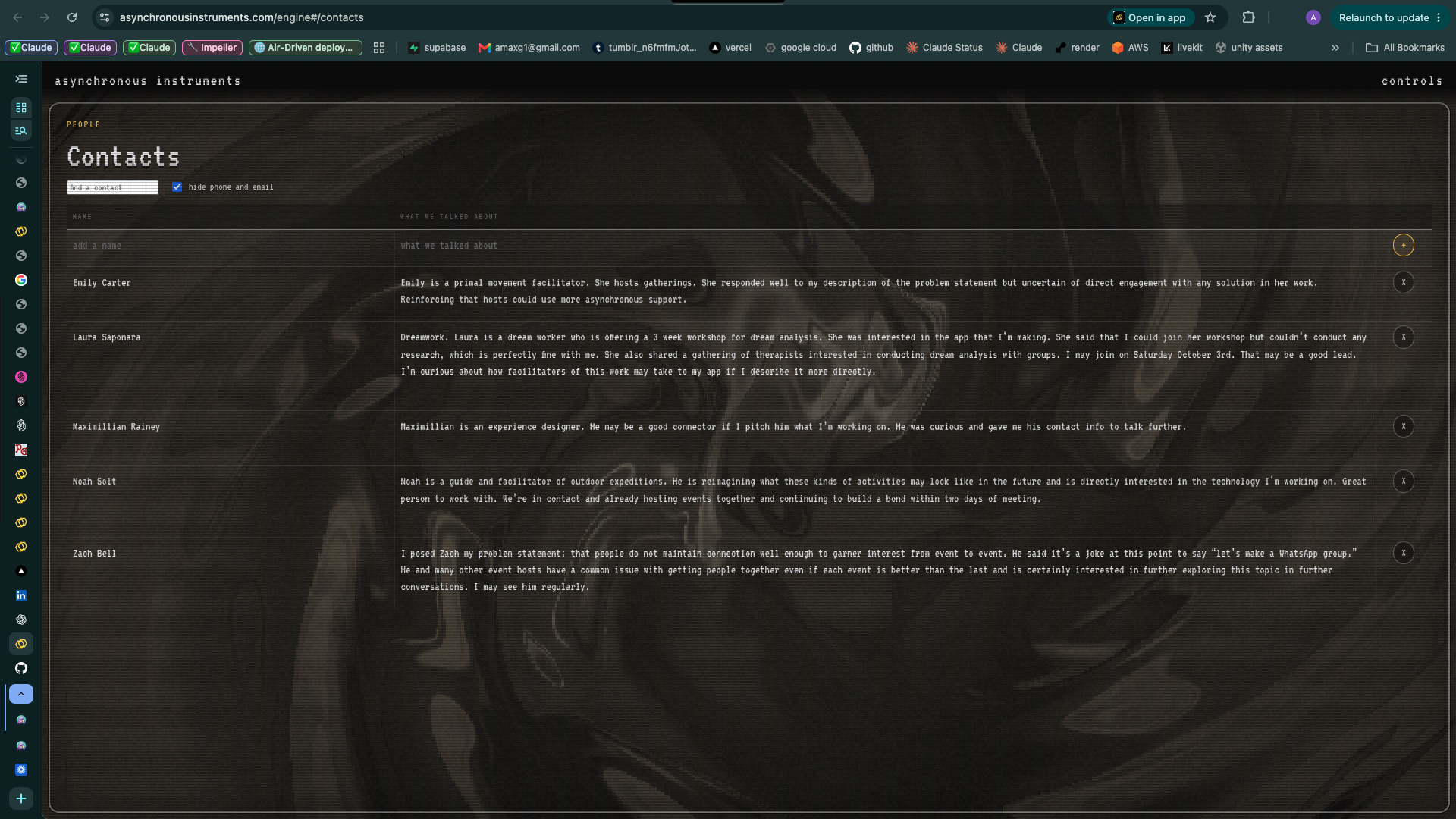
This week, I: - Spent two-and-a-half hours in a problem-statement workshop - Had several follow-up conversations with facilitators and potential users - Started showing up at events where facilitators, trainers, and workshop leaders gather - Found five people interested in the problem I’m exploring - Spoke with a dream worker about my original dream-journaling use case - Built a more interactive version of the application - Demoed the product with Jev and received feedback - Experimented with generating abstract and concrete images from anything spoken aloud - Scheduled more conversations and events for next week The biggest development was clarifying the problem: how do facilitators keep people practicing and connected after a training, workshop, retreat, or gathering ends, and between the moments when a group meets? That framing resonated immediately. One facilitator described the current progression as Facebook groups, then WhatsApp groups, and asked, essentially, “What comes next?” That conversation made the opportunity feel much more concrete. I also revisited dream work, my original use case, although working with therapists or clinical settings introduces barriers I need to understand before pursuing that direction further. For now, my North Star is clear: work directly with different kinds of facilitators and support them in keeping practice and community alive between gatherings. Next week, I’ll continue those conversations and attend several events, including a festival where I expect to meet more potential users.

Sign in to reply.
Asynchronous Instruments preview

These two weeks felt especially productive because I was able to move from building mostly on my own to getting meaningful external feedback. I'll start with the best update, which is the ability to begin to host retreats with Retreatology, which is a part of Moishe House. My partner is hosting a retreat in January and asked me to demo my product for her so that people can feel like they can stay in touch and continue to connect with what they learn after the retreat. And she's also set me up with the Retreatology leader who has a training in February, and I can turn around right after and host a retreat with my own skills and add my retreat and those people to the platform and try this. And then the next level of that is being connected to the leader and seeing if this can be used by the up to 36 retreats that are hosted over the course of a calendar year. That's the best way in. Four people reviewed my story map application, which has become my primary demo, and I received strong feedback from a range of perspectives. One of my original hypotheses was that authors, podcasters, and writers might want to map their own material to create a more immersive experience for their audiences. Two people independently suggested exactly that after seeing the application, which gave me some early validation. I also spoke with several filmmakers, and those conversations may lead to opportunities to bring film-related materials into the platform. On the product side, I pushed the application from a concept toward a much more fully fledged demo. I built easier ways to add new content and created a new homepage designed to draw people in, prompt reflection, and turn their ideas into conversation and stored data. I also received new leads to facilitators, especially meditation facilitators, and got further validation around my use case of helping people continue practices after retreats or workshops. I learned there are already products serving part of this need, which is encouraging because it gives me a clearer competitive landscape and a stronger basis for comparison. I also started my experiementation on X, IG, Youtube. I am pushing IG and testing my engine for social media, and getting good responses and making sure people know me through my persistent presence.

Sign in to reply.

Creating a Verancular - Asynchronous Instruments preview

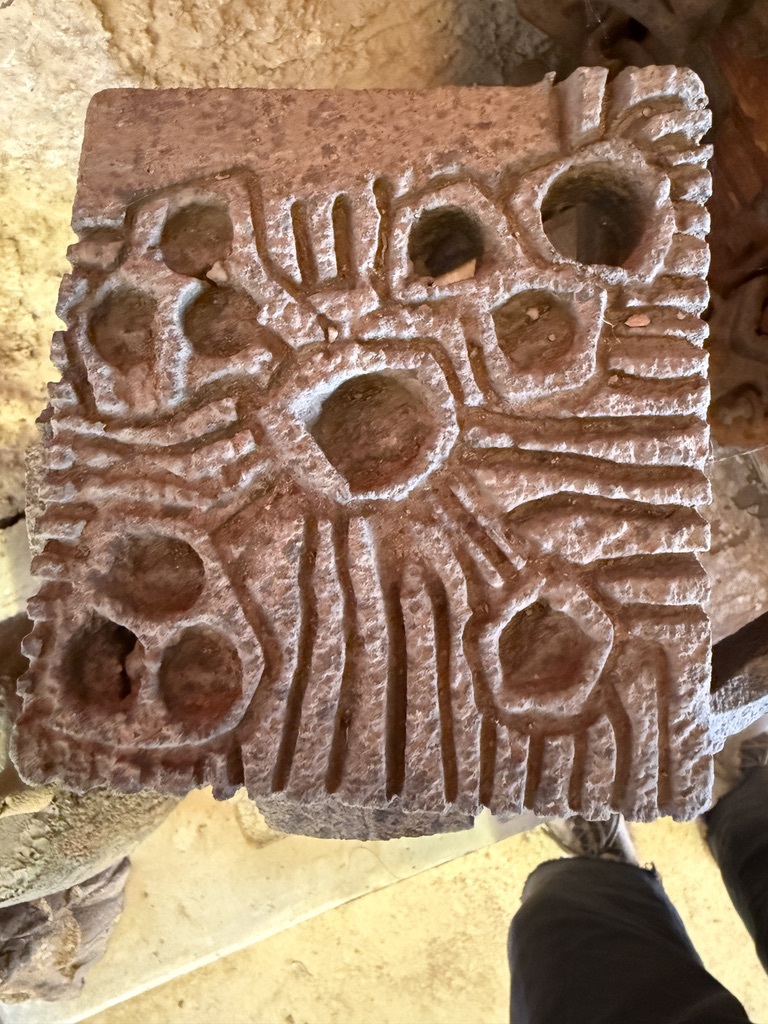
This week, I took inspiration directly from the physical world. I visited Arcosanti and Cosanti and became fascinated by their cast forms. Many are made from styrofoam molds, but what struck me was how usable those forms could be as a digital vocabulary. I researched additional examples, fed the references into Claude, and began developing a visual language of shapes that feel as though they could be found, cast, or uncovered in sand. I turned those forms into full 3D objects set within a sand-like environment. The goal is to make the application feel calm, exploratory, and tactile, allowing users to move through the space and discover what they are looking for. I also began recasting my Arabian Nights map using this material language, including the cities themselves, so the project is gradually becoming a more coherent world. Other inspirations included vintage keychain viewers, which led me to experiment with objects containing tiny “microfilm” views of text and media, and Chladni plates, where sound frequencies create visible patterns in sand. Upon showing off this new vernacular for my work, I received lots of good feedback from the people that I showed it to. I felt proud of demoing and receiving feedback. It felt like something that could be easily understood and enjoyed.

Sign in to reply.